
How Arrest Warrants Work in LaGrange County
A warrant may sit inside a public criminal cause. It may also be sealed, confidential, served, or recalled. Some appear only in a court document that never goes online. A stale search result tells you little. Current status is what counts. LaGrange County has two trial courts, Circuit and Superior, and their judges control the warrant process, while the Clerk maintains the court information and the Sheriff's stated mission includes warrant service. Town police and marshals can also make arrests or serve process in local matters, though each office answers a different part of the question.
No LaGrange County Arrest Warrant Roster
The Sheriff posts no LaGrange County warrant roster. There is no warrant-number search and no update schedule. Indiana's own FAQ says MyCase may show a warrant inside a public criminal case summary. Even so, it is not a warrant search, and no statewide public site lists every arrest warrant.
Key Point: A MyCase result is a lead to the correct LaGrange County court, not final proof of current warrant status.
The official Indiana explanation is captured below without any person's case details.
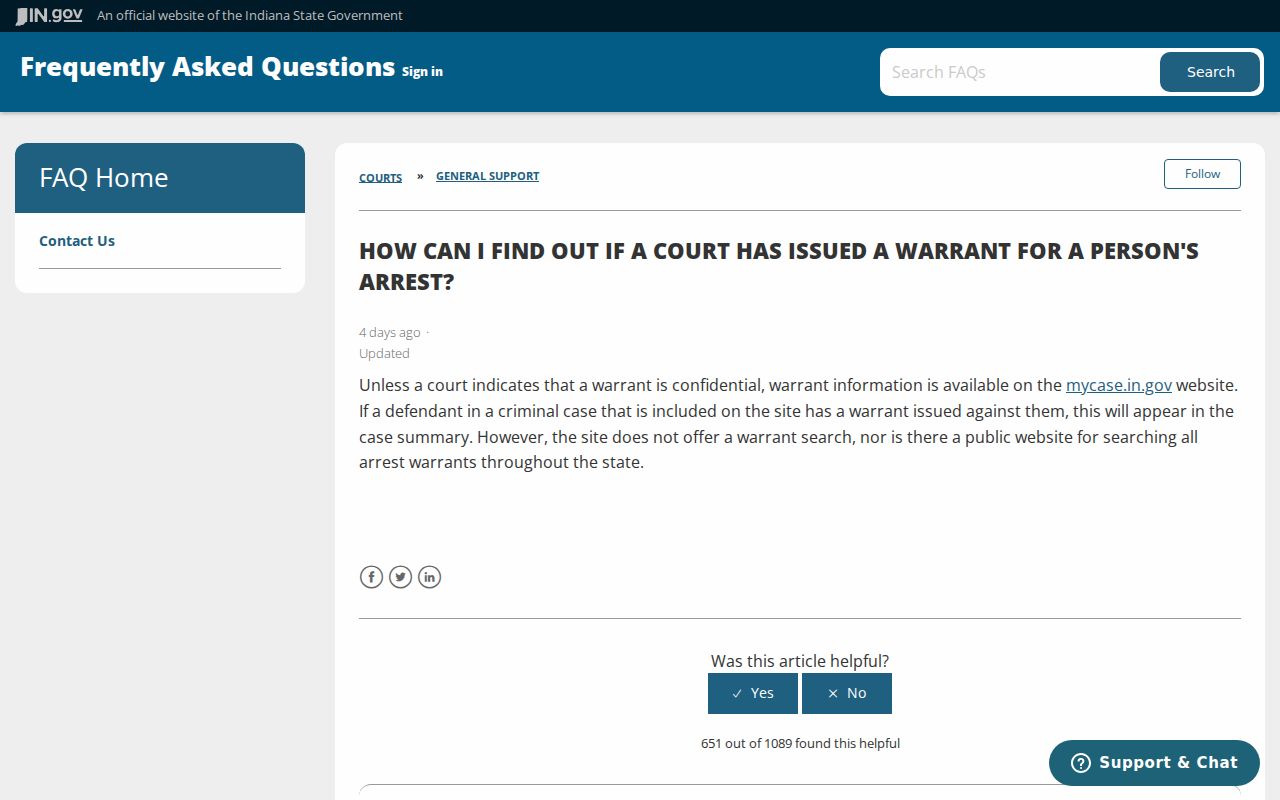
Use any LaGrange County result to spot the cause number and court, then call that court for a present answer.
Arrest Warrants: What They Contain
LaGrange County publishes no sample arrest-warrant entry. The court file can still supply enough public context for a precise confirmation call, so bring identifiers and ask directly.
| Cause number | The court identifier, illustrated without private data as 44D01-CR-CASE. |
|---|---|
| Issuing court | Circuit or Superior Court, depending on assignment. |
| Warrant event | Public docket language showing issuance or later court action when accessible. |
| Reason or offense | Case context if public, not proof of guilt. |
| Bond | An endorsed or court-set amount if disclosed and still current. |
| Service and status | Facts to confirm with the court and serving agency. |
MyCase case status is not warrant status. A LaGrange County case can stay open after a warrant is served or recalled, and a closed file may still show an old warrant event.
Search Both LaGrange County Warrant Courts
MyCase searches by cause number, citation, cross-reference, or party. Pick 44C01 for LaGrange County Circuit Court and 44D01 for Superior Court. Search both when the assignment is unknown. Title 9 traffic cases belong in Superior Court, while local rules divide most other criminal filings between the two.
- Open the public case and record the cause number and court.
- Read the case type, filing date, status, events, and public documents together.
- Call Circuit Court at 260-499-6358, Superior Court at 260-499-6363, or the Clerk at 260-499-6372.
- Ask whether the arrest warrant is active, served, recalled, confidential, or otherwise changed.
Party-name search finds your own case fast. Exact identifiers are safer, though, and MyCase allows status and filing-date filters while warning of a 1,000-result limit on any LaGrange County query.
How Warrants Get Served in LaGrange County
The Sheriff serves warrants across LaGrange County. Its stated mission covers completion of judicial orders, warrant service, civil process, and court security. Visit at 0875 S SR 9, LaGrange. The business line is 260-463-7491, with administrative hours Monday through Friday, 8 a.m. to 4 p.m. Dispatch, deputies, and jail services answer around the clock. No separate warrant desk or bond-payment portal is posted, and no unannounced surrender procedure appears either. Town police and marshal departments can arrest or serve papers, but that creates no town warrant court. The official Sheriff page lays out the county's service role.
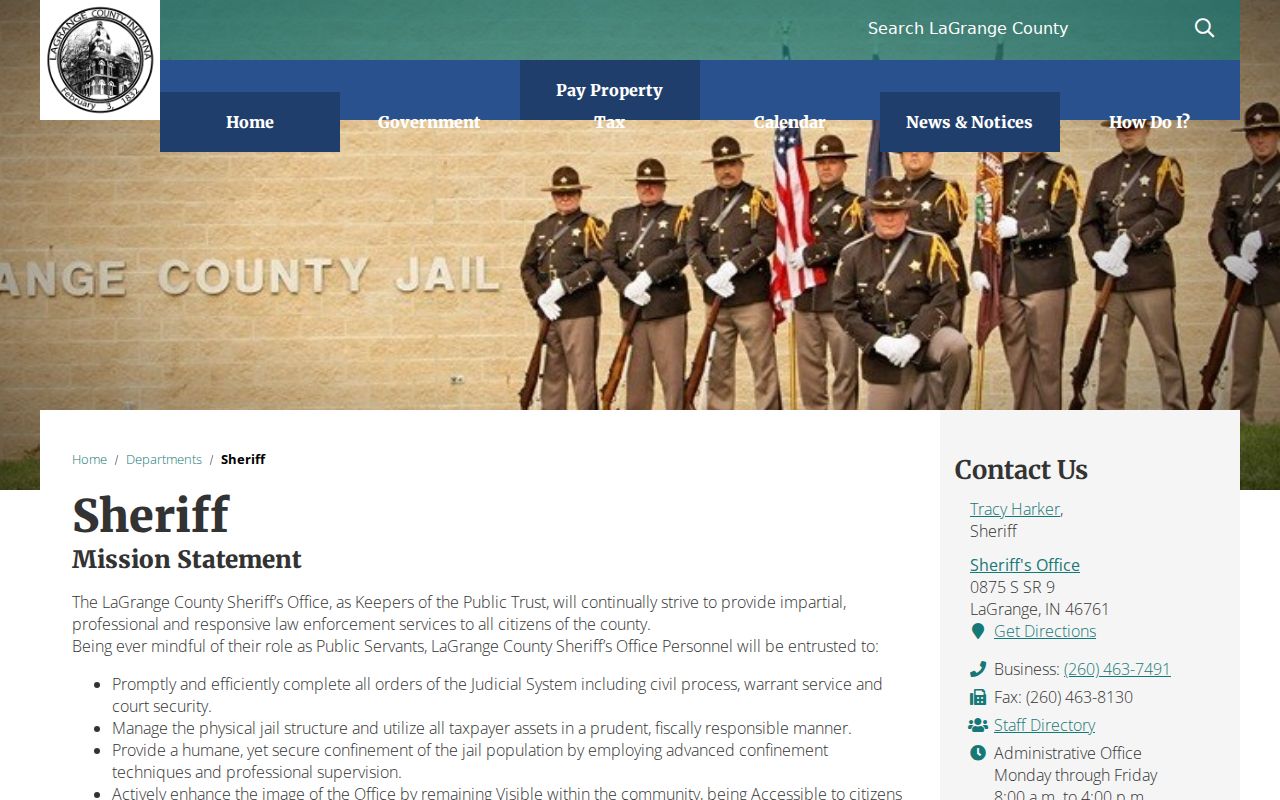
Call before appearing and ask which location and process the issuing court requires.
Why LaGrange County Arrest Warrants Stay Hidden
Court-access rules can hide a case for a time. When a request accompanies a LaGrange County arrest warrant and the legal conditions are met, the case may be excluded. An unserved warrant can also be confidential by court order. Investigative material, sealed documents, juvenile records, and protected personal information face added limits, and the official Rule 5 text records those boundaries.
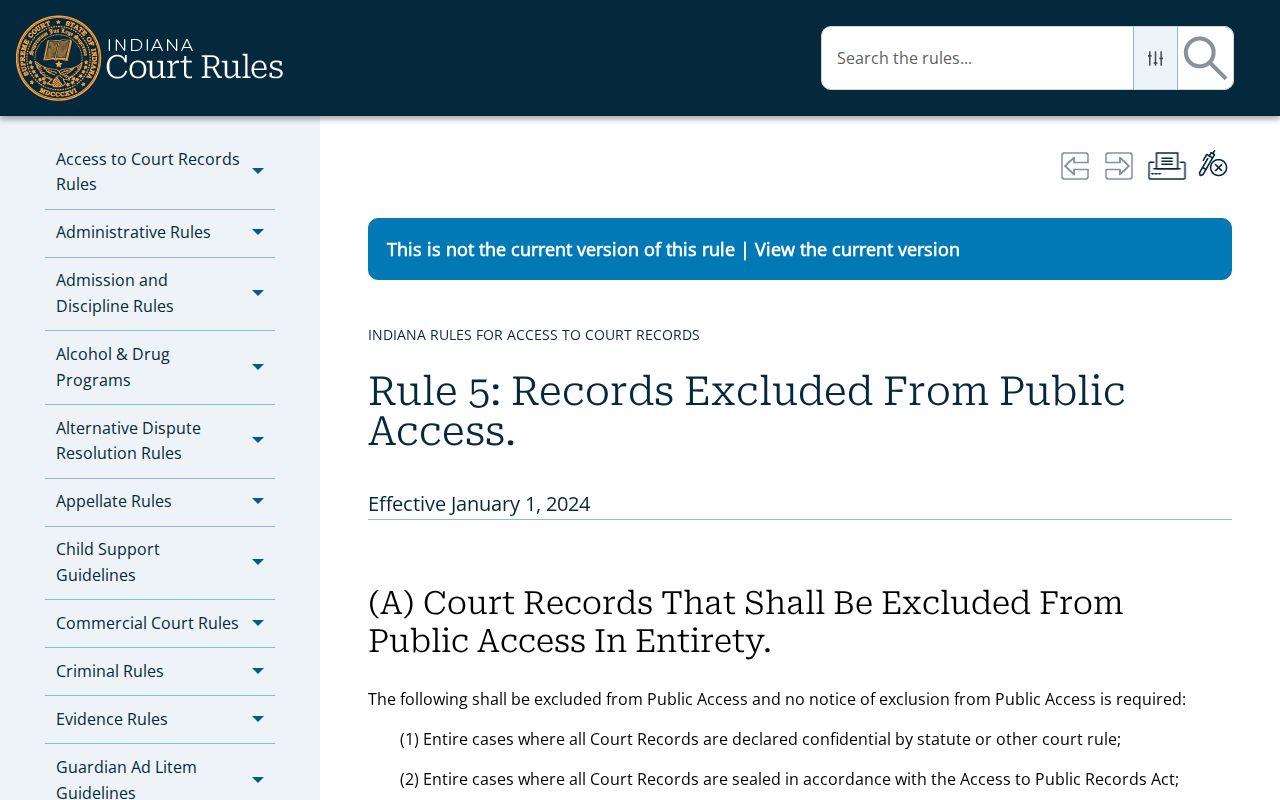
A refusal to disclose protected material proves nothing either way. A blank LaGrange County portal search is just as inconclusive.
Arrest Warrants, Summonses, and Bench Warrants
These are not synonyms. A LaGrange County summons, an arrest warrant, and a bench warrant each arise differently, and each calls for a different question.
| Process | Function | Practical question |
|---|---|---|
| Arrest warrant | Authorizes custody under judicial process | Is it active, and is bond endorsed? |
| Summons | Directs appearance without the same warrant form | When and where must the person appear? |
| Bench warrant | Commonly follows a missed duty or court direction | What does the issuing court require to recall it? |
A later case event can change the answer. Confirm the current LaGrange County court order rather than trusting a label copied from an old page.
LaGrange County Arrest Warrant Bond Rules
The LaGrange County bond schedule is presumptive when an arrest happens without a warrant or the warrant carries no endorsed bond. A judge can still go higher or lower. Serious and special categories are court-set. It is a guide, not a price list. Published amounts include $2,000 for a misdemeanor and $4,000 for a Level 6 felony, with higher lines for more serious levels. Murder carries no bond. Probation violations, cases with other pending charges, and several other categories go to the judge. A nonresident rule applies. So do limits on ten-percent cash. The rules also cover same-day or next-court-day initial-hearing timing, intoxication, and a family-violence cooling-off restriction. None of it promises advance release terms, so ask whether the LaGrange County warrant endorses bond or the judge must set it.
Handling an Arrest Warrant in Your Name
Save the cause number and call the issuing court. Ask about active status, bond endorsement, hearing requirements, appearance location, identification, and whether counsel can arrange a filing or hearing. Do not trust online payment to fix this. An unplanned LaGrange County jail visit does not resolve a judicial order either.
- Confirm the cause and issuing court through official channels.
- Discuss legal and custody risk with an attorney before acting.
- Follow the court's current instruction rather than a third-party site's claim.
- Verify the later docket entry after the required step is completed.
Warning: LaGrange County posts no safe-surrender window or universal arrest-warrant walk-in procedure.
The Public Defender can be reached at 260-499-6436. That line serves eligible people unable to afford counsel where incarceration is possible, while the LaGrange County Clerk explains filing logistics but cannot give legal advice.
Requesting LaGrange Arrest Warrant Records
An APRA request can reach a non-confidential record that already exists. It does not replace court procedure. LaGrange County asks you to describe the record with reasonable particularity on the County request form. Name the court or agency, the cause number, the record type, and the date range. No warrant-specific fee or county turnaround is published. Court documents belong with the Clerk, warrant-service records go to the Sheriff or serving agency, and the Indiana request guide shows which office holds what.
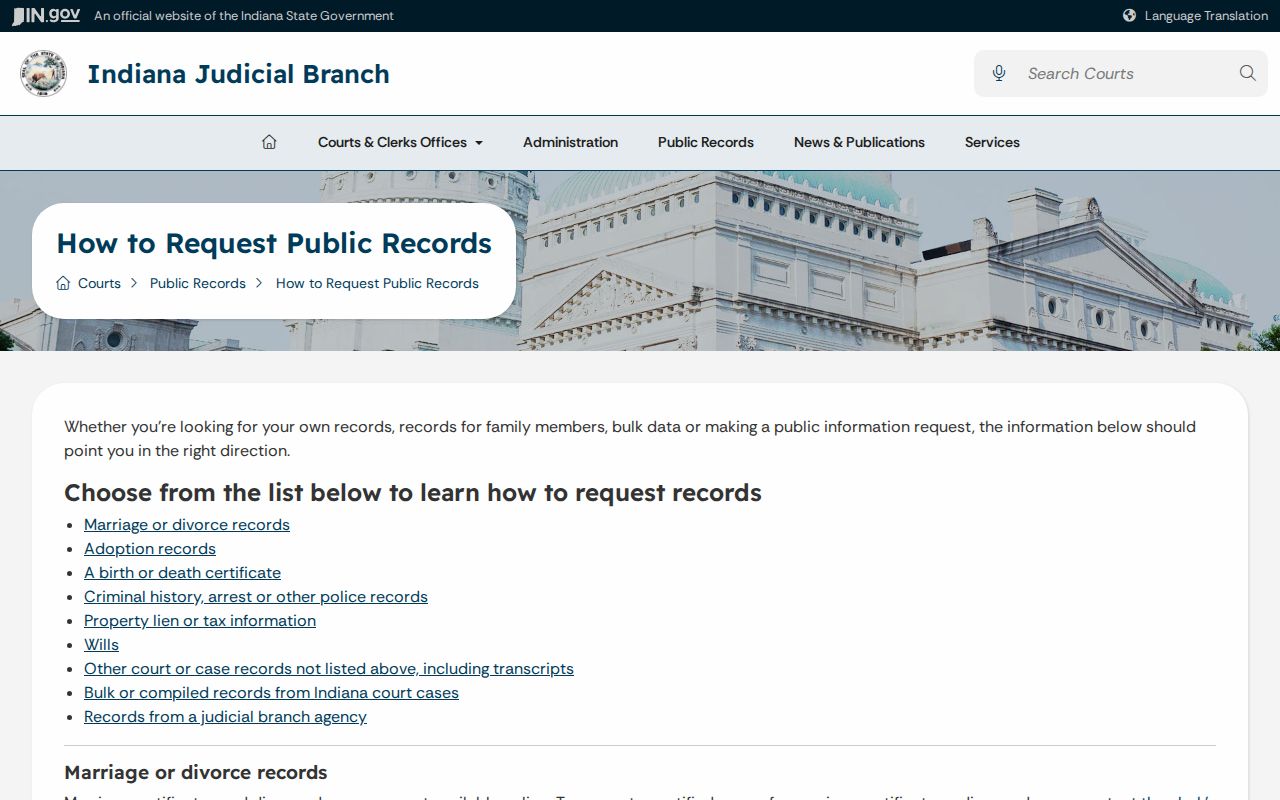
LaGrange County may withhold unserved, investigative, juvenile, sealed, or protected material. Ask for the existing public record rather than demanding a new list.
Federal Arrest Warrants Outside LaGrange County
Federal warrants run on a different track. LaGrange County sits in the Fort Wayne Division of the Northern District of Indiana. The docket routes there are PACER and the federal clerk. Federal judges and magistrate judges issue federal warrants, while the U.S. Marshals Service handles federal fugitive work. County MyCase results cannot certify federal status. The Northern District website warns that the court does not call or email to collect personal or financial details about arrest warrants or traffic violations.
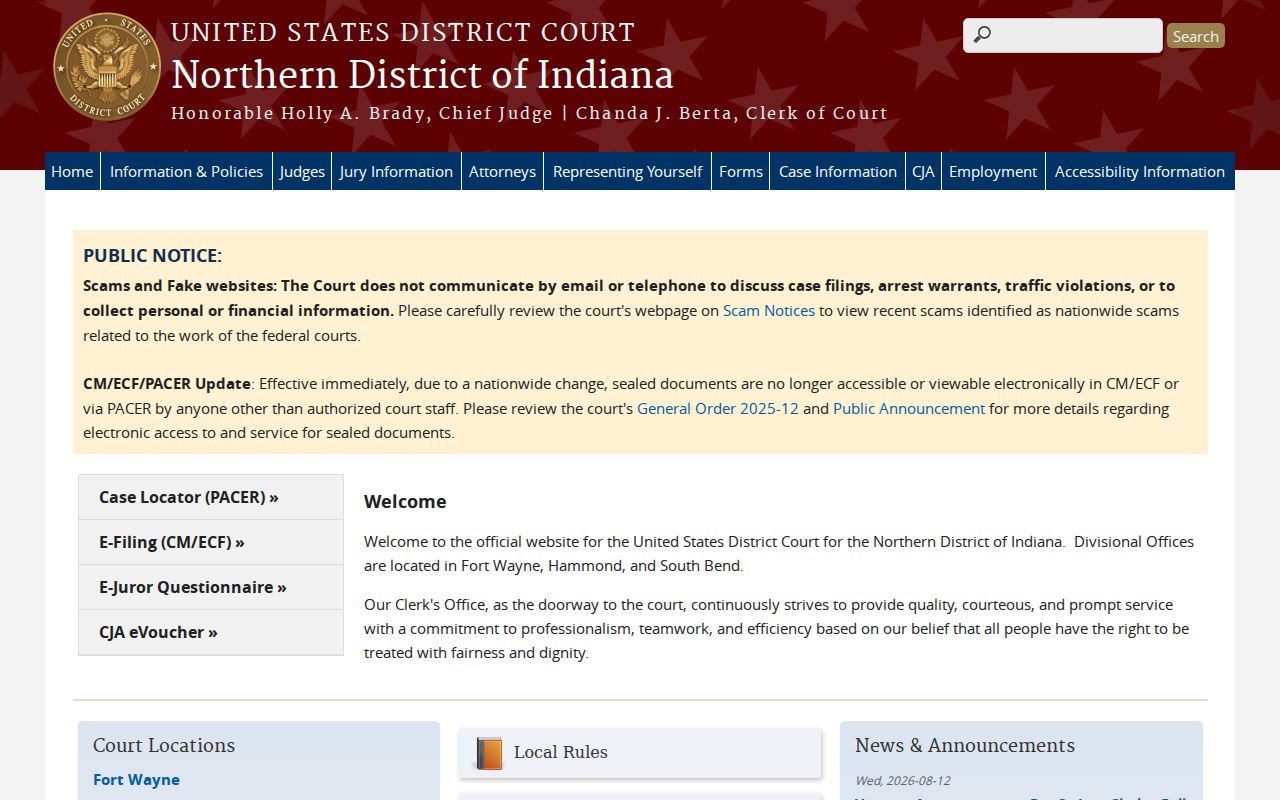
Hang up on any demand for immediate payment. Verify through the court's published contact instead. A public PACER docket does not prove whether a sealed federal warrant exists.